
I didn't set out to become an expat story.
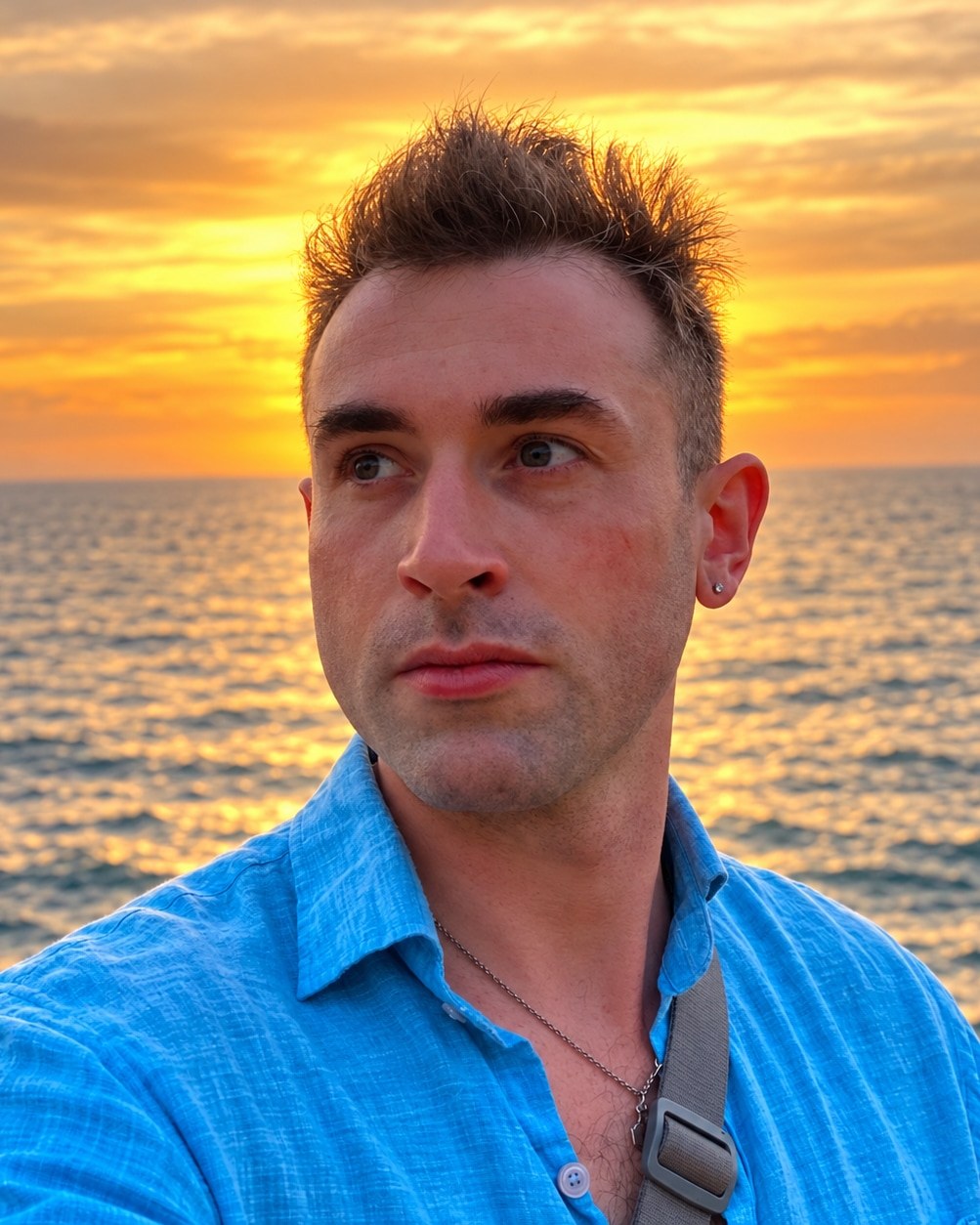
I'm Felix, an Australian who went to South East Asia for a few weeks and ended up living there. Move to SEA is the guide I wish I'd had.
"I don't think I left because I had some grand goal. I think I left because I wanted to lose myself a bit. And strangely, that's exactly what helped me find more of who I was."
How it started
Move to SEA didn't start with a business plan or a five-year vision board. It started with a spur-of-the-moment trip to Indonesia in December 2017, right when Mount Agung on Bali was erupting. Bali's airport had just been shut for nearly three days, flights were cancelled, and most people stayed home.
I ended up out around Gili, the small islands off Lombok. There are no cars there, just bicycles and horse carts, and that month the beaches were close to empty. In the evenings you could watch the volcano go off across the water from the sand. Something about it got under my skin straight away.
Three days in Saigon
Then Vietnam happened. I arrived on my way to China and Mongolia. Saigon was supposed to be three days. That turned into three months, then eight months, then I quit work and stayed longer. That probably tells you everything you need to know.
Saigon is loud, hot and never stops. Millions of motorbikes, food cooked on every corner, people eating on plastic stools on the footpath until late. What hit me first was the energy, and then the heart. People seemed to know how to enjoy life in the middle of it all. The small things mattered: a coffee with someone, a meal, sitting outside when the heat finally drops.
I lived in Saigon and spent time around southern Vietnam, including Vung Tau, the beach town a couple of hours down the coast where Saigon goes for sea air on the weekend.
Some of my strongest memories are from deeper in the Mekong. It's a different pace there: boats on brown water, fruit orchards, small river towns. Sunset over the river, that heavy, glowing heat, the kind of scene that asks nothing of you except that you stand there and take it in. The Mekong still feels like home to me.
The parts that weren't easy
It wasn't all sunsets. Staying longer than a holiday means dealing with the boring side of a country: visas that run out, landlords, banks, paperwork in a language you can't read, and the moment you realise you don't know who to ask. None of it is hard once you know how it works. The trouble is that nobody tells you how it works until you've already got it wrong.
What I kept seeing
Living across South East Asia stripped a lot away. It also showed me the same pattern again and again: people trying to make the move and getting scammed, misled, or lost in a fog of bad information. A lot of the relocation help out there felt unreliable, overpriced, or written by people who didn't know what a new arrival actually needs.
The biggest myth is that South East Asia is automatically cheap. That's where a lot of people get burned. Older movers often have the most riding on getting it right: a pension that has to stretch, health that needs good care, and a visa that may need renewing every few months.
Why this site exists
That's why Move to SEA exists. Not to sell a glossy dream, but to give you the real picture. Every guide lists the official sources it's based on and the date I last checked them, because the rules change and different offices apply them differently.
And if you'd rather talk it through, you can talk to someone who's been through it: the excitement, the mistakes, the visa stress, the great meals, the moments where you think "this was the best thing I ever did," and the odd moment where you think "what on earth am I doing?"
Where the story goes next
These days I move between Vietnam, Thailand, Cambodia and Australia at different times of the year. Kampot, Cambodia feels like the next chapter. It's a small river town near the coast, known for its pepper, with Bokor Mountain behind it and an easy road across to Vietnam. It's quieter and more spacious than the big cities, a growing expat town without the rush.
My wife is Vietnamese, and new ideas are still taking shape. My father came from Ireland to Australia in the 70s, my mother is Australian, and I've never felt completely one thing. Maybe that's why this life makes sense to me.
As Into the Wild puts it: "The core of man's spirit comes from new experiences." That's probably the simplest version of it.
When you want help with your own move
The guides are free. If you want someone to look at your situation and help you plan it, that's what Golden Compass Relocation does.
Who it helps
Retirees, remote workers, couples planning a reset, and anyone still deciding between Thailand, Vietnam, Cambodia or the Philippines.
What it covers
Choosing a country and city, budgeting, housing, banking, healthcare and the order to do it all in, with introductions to trusted local specialists.
What it isn't
Legal, migration, tax or financial advice. For those I'll point you to licensed professionals.