
Converted from Australian dollars at the rate on 12 October 2026, so treat them as rough.
Bangkok’s best private hospitals are as good as anything at home, and you’ll usually see a specialist the same week. Vietnam’s are good in the big cities, while Cambodia and the regional Philippines are where care gets thin. Wherever you land, your home cover stops at the border, so you need international health insurance.
If you’re over 50, that policy will be one of your biggest yearly costs, so most of this is about buying the right one.
Your home cover stops when you leave
Smartraveller is blunt about this. Medicare doesn’t pay for treatment overseas, and neither do Australian private health funds. You can still use Medicare on trips home for up to five years after you move. After that, only if you move back to live.
It’s the same story for the UK’s NHS, US Medicare and Canada’s provincial plans: once you live abroad, they won’t pay for care where you live. Plan on an international policy being your cover, not a top-up.
How good the hospitals are in Thailand
Bangkok’s top private hospitals treat patients from all over the world. Bumrungrad International sees more than 1.1 million patients a year, over 620,000 of them from abroad, and in 2002 it was the first hospital in Asia accredited by Joint Commission International (JCI). Bangkok Hospital and Samitivej are JCI accredited too, and the Bangkok Hospital group has branches in Chiang Mai, Phuket, Pattaya and Hua Hin.
Day to day, that means English-speaking staff and billing in the international departments, no waiting lists, and many doctors trained in the US, UK or Australia.
Public hospitals cost much less, but the waits are longer and less English is spoken. Most foreigners use private hospitals and insure for them.
What treatment costs in Thailand
Rough private prices in Bangkok next to private care in Australia. The premium hospitals (Bumrungrad, Bangkok Hospital) sit at the top of each range, and mid-tier private hospitals charge less. Always ask for a written estimate before anything planned.
| Treatment | Bangkok private (A$) | Australia private (A$) |
|---|---|---|
| GP consultation | 40–130 | 80–180 |
| Specialist consultation | 50–210 | 200–500 |
| Dental crown | 340–640 | 1,500–2,500 |
| Hip replacement | 16,000–24,000 | 30,000–55,000 |
The hip replacement figure is Bumrungrad’s published range of US$11,000 to US$17,000, including the implant and a standard stay.
Cheaper than home is not the same as cheap. A few days in intensive care can run to tens of thousands of dollars, and that’s before an evacuation flight from a smaller country to Bangkok.
Vietnam, Cambodia and the Philippines
Vietnam: In Ho Chi Minh City, FV Hospital and Vinmec are the main international-standard hospitals, and Family Medical Practice runs English-speaking clinics in Saigon, Hanoi and Da Nang. Routine care is good value. For complex surgery or cancer treatment, many foreigners fly to Bangkok or Singapore.
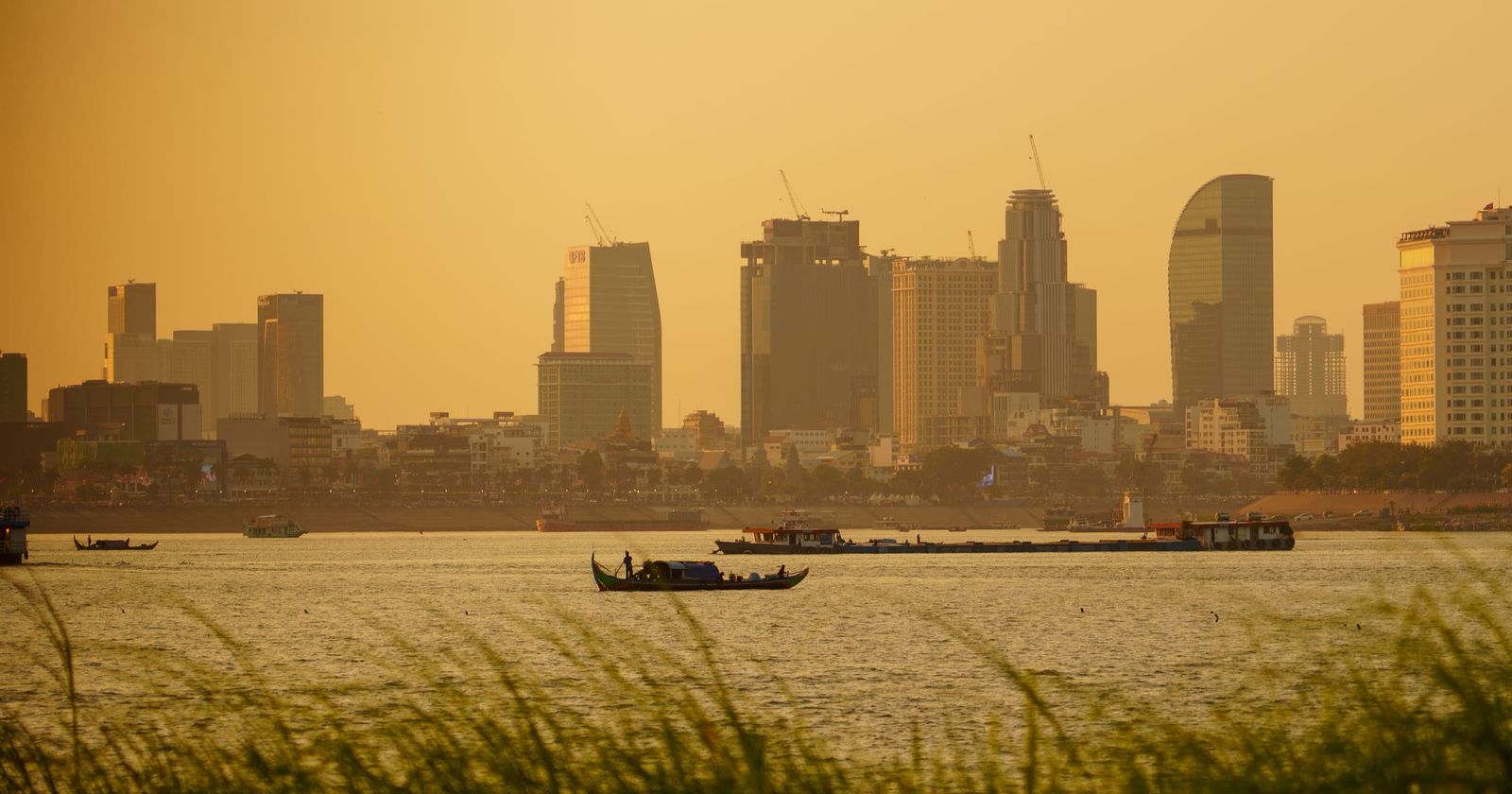
Cambodia: Royal Phnom Penh Hospital and Sunrise Japan Hospital handle most care in Phnom Penh. Smartraveller says there are almost no facilities outside the capital that can deal with an emergency, and hospitals usually want cash up front. Evacuation cover is essential. The Cambodia healthcare guide has the detail.
Philippines: Manila’s St. Luke’s, Makati Medical Center and The Medical City are good, as are the main Cebu hospitals. Care drops off quickly outside the big cities. See moving to the Philippines.
What insurance the Thai visas require
- Non-Immigrant O-A (retirement, applied for from your home country): cover of at least US$100,000 or 3,000,000 THB (about A$128,000) for the whole stay, including COVID-19. The old 40,000 / 400,000 THB minimum you’ll still see online no longer applies to new O-A applicants. Thai policies built for this are listed on the Thai General Insurance Association’s long-stay site, and overseas insurers are accepted if they complete the Foreign Insurance Certificate.
- Non-Immigrant O extended for retirement inside Thailand: immigration doesn’t currently ask for insurance, but confirm with your local office.
- LTR visa: cover of at least US$50,000, Thai social security, or US$100,000 held in the bank for 12 months.
- DTV: no insurance requirement.
Buy cover even where it isn’t required. The visa minimum gets you the visa. It won’t pay for a heart operation.
Choosing a policy
Asia-only or worldwide
Most foreigners living in South East Asia buy Asia-only cover (or worldwide excluding the USA) because it’s much cheaper. Worldwide cover makes sense if you want the option of treatment at home. A common middle path is Asia cover that includes short visits home. Check how many weeks a year that allows, and whether your home country has tighter limits.
What to compare
- Annual limit: well above any visa minimum. Limits of 3,000,000 to 10,000,000 THB (about A$128,000 to A$430,000) are common on decent policies.
- Excess (deductible): a higher excess, say A$1,000 to A$2,000 a year, can cut the premium a lot if you can pay routine costs yourself.
- Evacuation: essential anywhere outside Bangkok and Singapore.
- Direct billing: check your nearest hospitals are in the insurer’s network, so you aren’t paying first and claiming later.
- Exclusions: mental health, dental, motorbike accidents and adventure sports are often excluded or capped.
- Renewal terms: whether the insurer can refuse to renew you as you age, and whether it re-prices your whole age band.
Insurers people commonly compare
Cigna Global, Allianz Care, Bupa Global, AXA, April International, Now Health and Pacific Cross are the names you’ll see most. Thai insurers on the TGIA long-stay list are often cheaper for Thailand-only cover. Brokers can compare several at once. They’re paid commission by insurers, so ask which insurers they don’t cover.
What it costs by age
Rough annual premiums, with a solid limit and a moderate excess. Your own quotes will move with your health, the excess and the insurer, so treat these as a starting point.
| Age | Entry-level (A$/yr) | Solid Asia cover (A$/yr) | Worldwide (A$/yr) |
|---|---|---|---|
| 40–50 | 900–1,400 | 1,500–2,200 | 2,500–3,800 |
| 51–60 | 1,300–2,000 | 2,200–3,200 | 3,500–5,500 |
| 61–65 | 1,800–2,800 | 3,000–4,500 | 5,000–7,500 |
| 66–70 | 2,500–3,800 | 4,200–6,000 | 7,000–10,000+ |
Some insurers won’t take new applicants past a certain age, which is one more reason not to leave it late.
If you have a pre-existing condition
This is where people lose the most money. If you have high blood pressure, diabetes, heart disease, a cancer history or bad joints, an insurer may exclude that condition, add a loading, or cover it only after a waiting period.
- Buy before a diagnosis. If you’re healthy and might move in the next year or two, look at cover now.
- Disclose everything. Leaving something out can void a claim exactly when you need it.
- Ask how it’s underwritten. Full medical underwriting tells you up front what’s excluded. Moratorium underwriting may cover an old condition after a set period with no symptoms or treatment, but you only find out when you claim.
For how insurance fits into a monthly budget, see the cost of living guide.
Frequently asked questions
Does Medicare cover me in Thailand or Vietnam?
No. Medicare doesn't pay for any treatment overseas, and neither do Australian private health funds. Smartraveller says you can still use Medicare on visits back for up to five years after you move, and after that only if you move back to live. International health insurance is the replacement, not an extra.
What health insurance does the Thailand retirement visa require?
For the Non-Immigrant O-A, cover of at least US$100,000 or 3,000,000 THB (about A$128,000) for your whole stay, including COVID-19. The old 40,000 THB outpatient and 400,000 THB inpatient minimum no longer applies to new O-A applicants. Overseas insurers are accepted if they fill in the official certificate.
How much does international health insurance cost in Thailand?
As a rough guide for Asia-only cover with a sensible excess, about A$1,500 to A$2,200 a year in your 40s, A$2,200 to A$3,200 in your 50s and A$3,000 to A$4,500 at 61 to 65, rising steeply after that. Pre-existing conditions, a low excess or worldwide cover all cost more. Get at least three quotes.
Are pre-existing conditions covered?
Sometimes, after a waiting period or with a higher premium, and sometimes not at all. It depends on the insurer and how the policy is underwritten. The most useful thing you can do is buy cover while you're healthy, before a diagnosis.
Is healthcare in Thailand cheaper than in Australia?
Yes, for most things. A GP visit at a Bangkok private hospital costs roughly A$40 to A$130, and a hip replacement at Bumrungrad about A$16,000 to A$24,000, against A$30,000 or more privately in Australia. A serious admission can still run to tens of thousands of dollars, which is why you insure.
Sources
Last checked 14 October 2026
- Bumrungrad International Hospital factsheetbumrungrad.com
- Bangkok Hospital, sixth JCI accreditation (2023)bangkokhospital.com
- Medical Tourism Association, orthopaedic surgery prices at Bumrungrad (2026)better.medicaltourism.com
- Thai General Insurance Association, O-A visa insurance guidelinelongstay.tgia.org
- Royal Thai Embassy Oslo, Non-Immigrant O-A requirements (updated 15 September 2026)oslo.thaiembassy.org
- Board of Investment, LTR visa health insurance requirementltr.boi.go.th
- Smartraveller, retiring overseas (Medicare and private health insurance)smartraveller.gov.au
- Smartraveller, Cambodia (health)smartraveller.gov.au
- UK Government, medical facilities in Cambodia (2026)gov.uk
General information only, current as of 14 October 2026. Rules change, so confirm visa, tax and legal details with the relevant authority or a licensed professional before acting.