
Converted from Australian dollars at the rate on 12 October 2026, so treat them as rough.
Vietnam doesn’t have a retirement visa. Retirees live there anyway, on a 90-day e-visa that means leaving the country four times a year to get a new one.
If you’re over 50 and weighing Vietnam up, that trip every three months is the thing to decide on first. I lived in Saigon and love the country, but the visa question settles it for a lot of retirees. Below is how it works, what it costs, where the good hospitals are and how Vietnam compares with its neighbours.
Does Vietnam have a retirement visa?
No. Vietnam’s visa categories cover work, investment, study, family and visiting. None is based on age, a pension or savings, so being 65 with a good income gets you nothing a 30-year-old tourist can’t get.
Vietnam has added long-stay options since 2025, but not for retirees. A 2025 decree created a visa-exemption card of up to five years for investors, scholars, experts and other guests the government wants to attract. A 2025 law added visas for digital-technology specialists and their families. A “golden visa” for wealthy foreigners has been discussed since 2025, but it’s still a proposal, not law.
The 90-day e-visa most retirees use
- Length: up to 90 days, single or multiple entry, according to the Vietnam Immigration Department.
- Fee: US$25 for single entry or US$50 for multiple entry (about A$72), under the fee schedule in force since 1 April 2026.
- Where to apply: only on the official portal, evisa.gov.vn. Vietnam’s embassies warn about lookalike sites.
- Processing: usually three to five working days, the US State Department says.
A few details catch people out. Vietnam usually issues the visa for exactly the dates you request, so ask for the full 90 days. The e-visa ties you to the entry and exit points you chose when you applied, which matters if you cross by land. And a multiple-entry e-visa lets you leave and come back within its 90 days, for a medical appointment in Bangkok for example, but the 90 days don’t restart when you return.
The US State Department says an e-visa can’t be renewed or extended while you’re in Vietnam. Canada’s advice mentions extensions through the Immigration Department, but don’t build a retirement on one. Plan on leaving. Overstaying, even by accident, means fines and possible delays leaving the country.
Who gets in without a visa
| Passport | Without a visa | For a longer stay |
|---|---|---|
| Australia, US, Canada, New Zealand, Ireland | No exemption | 90-day e-visa |
| UK and 11 others (first list below) | 45 days, until March 2028 | 90-day e-visa |
| 12 more European countries (second list) | 45 days, until August 2028 | 90-day e-visa |
- First list: the UK, Germany, France, Italy, Spain, Denmark, Sweden, Norway, Finland, Japan, South Korea and Russia.
- Second list: Belgium, the Netherlands, Luxembourg, Switzerland, Poland, the Czech Republic, Hungary, Slovakia, Slovenia, Croatia, Romania and Bulgaria.
Phu Quoc island has its own visa-free entry of up to 30 days, but it doesn’t help you live on the mainland. Even with 45 visa-free days, a 90-day e-visa means half as many trips out.
What leaving every 90 days costs
Four multiple-entry e-visas a year cost US$200 (about A$290). The trips are the real cost. Bangkok, Kuala Lumpur, Singapore and Phnom Penh are short flights from Ho Chi Minh City, Hanoi or Da Nang.
As a rough guide, a budget return flight plus two nights in a mid-range hotel and meals comes to A$400 to A$900 a trip for one person, or A$1,600 to A$3,600 a year. A bus to Phnom Penh is cheaper, but you’ll need a Cambodian visa too (see the Cambodia guide), and your e-visas must name that border crossing for the exit and the return.
The money is only part of it. Each trip means planning around your lease, your medication and your health, and in a year when you’re unwell, or a typhoon closes the airport, the deadline doesn’t move. Each time you come back, your stay has to be declared to the local police. Hotels do this automatically; in an apartment, make sure your landlord does it.
Who can get a residence card
A temporary residence card (TRC) lets you live in Vietnam for one or more years without leaving. It’s tied to a reason Vietnamese law recognises:
- Work: you hold a Vietnamese work permit, or confirmation that you’re exempt from one.
- Investment: you’ve put capital into a Vietnamese business. Cards for the top investor category can run up to 10 years.
- Family: you’re the spouse, parent or child of a Vietnamese citizen, or the spouse, parent or under-18 child of a foreigner there on a work or investment visa.
Cards cost US$145 (about A$210) for up to two years, US$155 (about A$220) for two to five years and US$165 (about A$240) for five to ten. The application goes through immigration with a sponsor: the Vietnamese company, or your Vietnamese family member.
If you’re marrying a Vietnamese citizen, Smartraveller notes the marriage needs Vietnamese government approval and a Certificate of No Impediment to Marriage. A Vietnamese immigration lawyer can tell you which card fits and in what order to do the paperwork.
What I’d steer clear of is a work permit or company set up only to get a card. Smartraveller warns that Vietnam can stop foreigners leaving while an investigation or business dispute is open, including over work without a valid permit.
Where retirees live in Vietnam
Vietnam merged its provinces on 1 July 2025. Vung Tau is now part of Ho Chi Minh City and Hoi An is part of Da Nang, and leases and documents use the new names.
- Ho Chi Minh City (Saigon): the best hospitals in the south, the biggest expat community and the most flights. Also hot all year, loud and crowded.
- Hanoi: the capital, with a cool winter, good hospitals and a more traditional feel. Air quality is often poor in the cooler months, which matters if you have breathing problems.
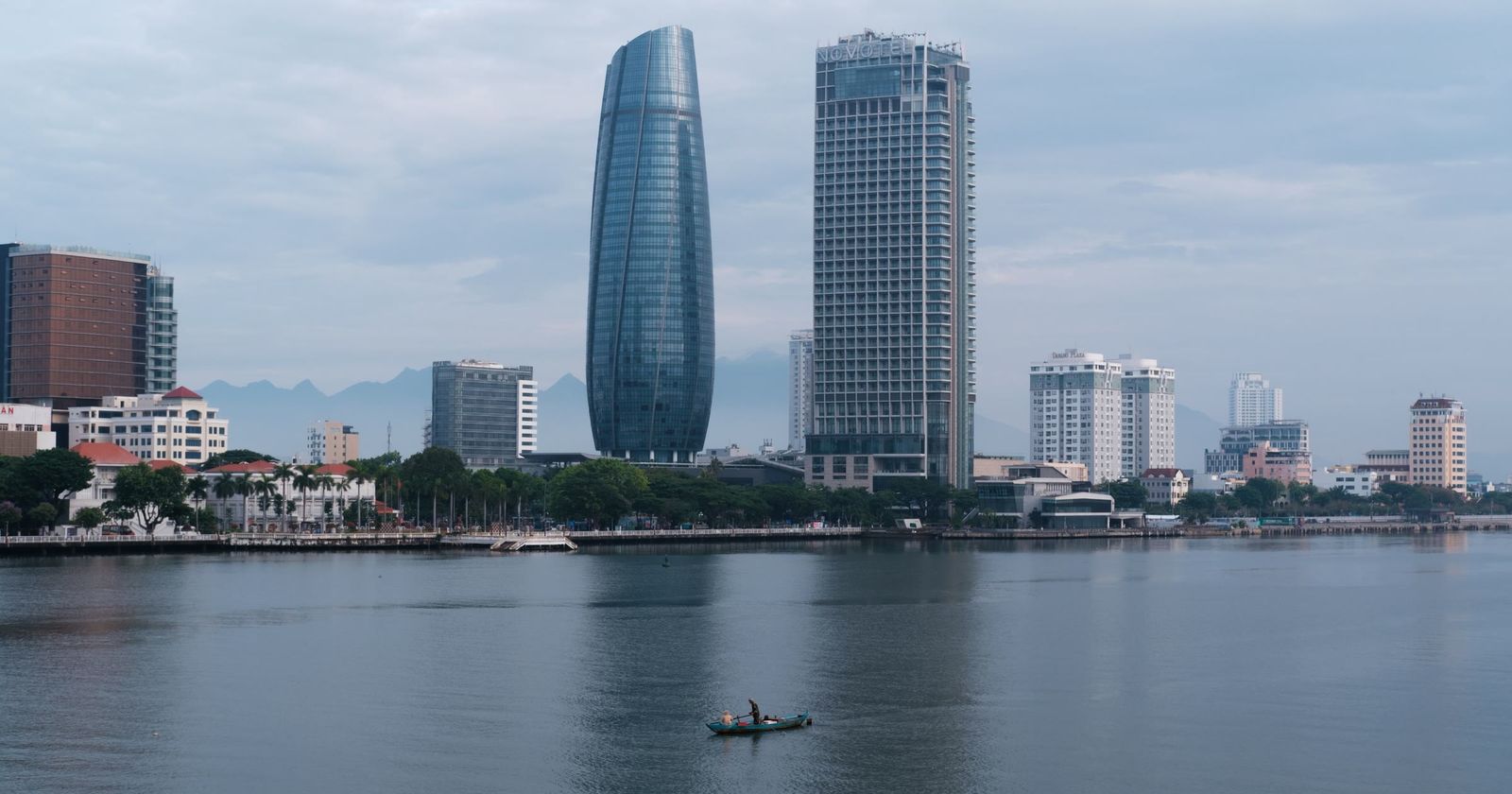
- Da Nang: a mid-sized beach city with modern apartments, good private hospitals and the lowest costs of the big cities. The rainy season, roughly September to December, brings typhoons and flooding.
- Hoi An: a small historic riverside town under an hour from Da Nang. Quieter and pretty, but the old town floods in the wet season, and serious medical care means Da Nang.
- Vung Tau: a beach city about two hours from central Saigon by road or ferry, with a long-established expat community. Local hospital care is limited, so plan on Saigon for anything serious.
- Nha Trang: a beach city with a big tourist trade and a Vinmec hospital.
What retiring in Vietnam costs a month
These are monthly ranges for one person, rounded from my cost of living guide. “Frugal” means a basic apartment and mostly local food. “Comfortable” means a modern one-bedroom in an expat area, eating out often, health insurance and some regional travel.
| City | Budget | Million VND/mth | A$/mth |
|---|---|---|---|
| Ho Chi Minh City | Frugal | 17–26 | 940–1,400 |
| Ho Chi Minh City | Comfortable | 31–49 | 1,700–2,700 |
| Ho Chi Minh City | Rent in a comfortable budget | 15–24 | 830–1,300 |
| Da Nang | Frugal | 13–22 | 720–1,200 |
| Da Nang | Comfortable | 25–40 | 1,400–2,200 |
| Da Nang | Rent in a comfortable budget | 11–17 | 610–940 |
Hanoi costs roughly what Saigon does, and the smaller beach towns sit closer to Da Nang. Couples should add 50 to 70 percent, not double.
Two things push a retiree’s budget higher. The comfortable figures assume mid-life insurance premiums, and at 66 to 70 solid Asia-only cover is more like A$4,200 to A$6,000 a year (see the insurance price table). The trips out every 90 days come on top of that.
Where the good hospitals are
Vietnam’s best private hospitals are in the three big cities.
- Ho Chi Minh City: FV Hospital and Vinmec Central Park both hold Joint Commission International (JCI) accreditation. FV renewed it for the fourth time in a row in 2025, and Vinmec Central Park gained it the same year, according to the hospitals. DFAT’s hospital list also includes English-speaking private hospitals such as City International, American International Hospital and Hanh Phuc, and Family Medical Practice clinics.
- Hanoi: Vinmec Times City was the first general hospital in Vietnam to gain JCI accreditation, in 2015. The UK government’s list notes English-speaking staff at Hanoi French Hospital, Family Medical Practice, Raffles Medical Clinic and International SOS.
- Da Nang and Hoi An: DFAT lists Vinmec Da Nang and Hoan My Da Nang, both with English-speaking staff and 24-hour emergency care, plus a Family Medical Practice clinic. Hoi An has Saigon Hoi An General Hospital.
Outside those cities it thins out. DFAT notes that Vung Tau Hospital has no English-speaking staff and you’d need an interpreter, though nearby Ba Ria General Hospital lists English. Canada’s travel advice says good health care is limited outside Hanoi and Ho Chi Minh City, and the US State Department says hospitals often want payment up front.
For complex surgery or cancer treatment, many expats in Vietnam fly to Bangkok or Singapore. So buy international health insurance that covers Vietnam and includes medical evacuation, ideally before a diagnosis. Medicare, the NHS and US Medicare don’t cover you there. The healthcare and insurance guide explains what to compare.
Can a foreigner buy property in Vietnam?
Partly. Foreigners can’t own land in Vietnam. You can buy an apartment in an approved development, but foreigners together can own no more than 30 percent of the units in a building, and ownership runs for up to 50 years from the date of the ownership certificate.
The rules are moving. A draft revision of the Housing Law, released in September 2026, would stop foreigners buying landed houses and leave apartments only. It’s a draft, not law.
Most retirees rent, and I’d rent for at least a year before buying anything. If you do buy, use a Vietnamese property lawyer who works for you, not the developer. The apartment-hunting guide covers renting.
Vietnam vs Thailand, Cambodia and the Philippines
| Country | Retirement visa | Main test | Renewal |
|---|---|---|---|
| Thailand | Yes, from 50 | 800,000 THB in a Thai bank (about A$34,000) or 65,000 THB a month income | Yearly, in Thailand |
| Cambodia | In effect, from 55 | Proof of retirement, no set minimum | Every 12 months, US$275–300 (about A$390–430) through an agent |
| Philippines | Yes (SRRV), from 40 | US$15,000 deposit at 50+ with a pension (about A$21,000) | US$360 a year (about A$520) |
| Vietnam | No | Nothing to qualify for | Leave for a new e-visa every 90 days |
Vietnam is the easiest of the four to get into for 90 days and the hardest to settle in. The Thailand retirement visa, Cambodia’s ER extension and the Philippines SRRV all let you settle for a year or more at a time. For the two most popular choices side by side, see Thailand vs Vietnam, and for all four, retiring in South East Asia.
Vietnam suits retirees who are fit, like to travel and don’t mind a trip out every three months, and people with a Vietnamese spouse or a real business there. It’s a harder fit if you want one visa and to stop thinking about it, if you have complex health needs, or if regular flights are getting harder for you.
Frequently asked questions
Does Vietnam have a retirement visa?
No. Vietnam has no visa based on age, pension or savings, and the long-stay options added since 2025 are for investors, experts and technology specialists. Most foreign retirees live there on 90-day e-visas and leave the country before each one runs out. A "golden visa" has been discussed since 2025 but isn't law.
How long can I stay in Vietnam on an e-visa?
Up to 90 days, with single or multiple entry. The government fee is US$25 for single entry or US$50 for multiple entry (about A$72). The US State Department says an e-visa can't be renewed or extended inside Vietnam, so plan on leaving before it ends and applying for a new one.
Do Australians need a visa for Vietnam?
Yes. Australia isn't on Vietnam's visa-exemption list, and neither are the US, Canada or New Zealand, so you need an e-visa from the official portal, evisa.gov.vn. Britons and citizens of 23 other European and Asian countries on the list can enter visa-free for 45 days, but most still use the e-visa for a long stay.
Can a foreign retiree get residency in Vietnam?
Not as a retiree. A temporary residence card needs a reason the law recognises, such as a work permit, an investment in a Vietnamese business, or being the spouse, parent or child of a Vietnamese citizen. If one of those applies to you, a Vietnamese immigration lawyer can tell you which card fits.
Can foreigners buy property in Vietnam?
Foreigners can't own land, but they can buy an apartment in an approved development. Foreigners together can hold no more than 30 percent of the units in a building, and ownership runs for up to 50 years from the date of the certificate. A September 2026 draft of a revised Housing Law would remove landed houses from what foreigners can buy; it isn't law yet.
Sources
Last checked 14 October 2026
- Vietnam Immigration Department, e-visa information on the national immigration portalimmigration.gov.vn
- Vietnam Government News, entry, exit and residence fees from 1 April 2026 (Circular 28/2026/TT-BTC)en.baochinhphu.vn
- Vietnam Government News, visa exemption for citizens of 24 countries from 15 August 2025en.baochinhphu.vn
- Embassy of Vietnam in Algeria, 45-day visa exemption for 12 countries extended to March 2028 (Resolution 44/NQ-CP)vnembassy-algiers.mofa.gov.vn
- Embassy of Vietnam in Thailand, visa and e-visa informationvnembassy-bangkok.mofa.gov.vn
- EY Vietnam, Vietnam's visa exemption policy and Decree 221/2025 (August 2025)ey.com
- Tap chi Quan ly nha nuoc, new points in Vietnam's law on foreigners' entry and residence (August 2026)quanlynhanuoc.vn
- UK Government (FCDO), Vietnam entry requirementsgov.uk
- US Department of State, Vietnam international travel informationtravel.state.gov
- Government of Canada, Vietnam travel advice and advisoriestravel.gc.ca
- Smartraveller, Vietnam (local laws, marriage and exit bans)smartraveller.gov.au
- Vietnam Law and Legal Forum (Vietnam News Agency), TT visas and temporary residence cards for family membersvietnamlawmagazine.vn
- Khanh Hoa Provincial Police, procedure for issuing temporary residence cards to foreigners (2024)congan.khanhhoa.gov.vn
- Vietnam Government News, names and centres of the 34 provinces (2025 merger)en.baochinhphu.vn
- Australian Consulate-General Ho Chi Minh City (DFAT), list of hospitals in southern and central Vietnam (July 2026)hcmc.vietnam.embassy.gov.au
- UK Government, list of medical facilities in Hanoi and northern Vietnamgov.uk
- FV Hospital, fourth consecutive JCI accreditation (2025)magazine.fvhospital.com
- Vinmec, Central Park hospital achieves JCI accreditation (2025)vinmec.com
- UK Government, living in Vietnam (property and residency)gov.uk
- Viet Nam News (Vietnam News Agency), draft Housing Law would limit foreign ownership to apartments (October 2026)vietnamnews.vn
- Reserve Bank of Australia, exchange ratesrba.gov.au
General information only, current as of 14 October 2026. Rules change, so confirm visa, tax and legal details with the relevant authority or a licensed professional before acting.